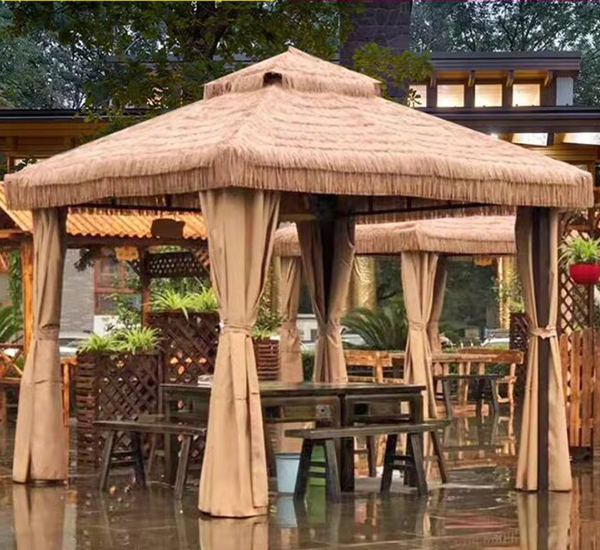
The maintenance of straw pavilions should be combined with their natural material characteristics, and measures such as regular inspections, moisture and insect prevention, and structural reinforcement should be taken to extend their service life. The following are specific maintenance methods and operation points:
1、 Daily cleaning and debris removal
Remove dust and fallen leaves
Tools: Soft bristled brush, bamboo rake, or small vacuum cleaner (to avoid scratching straw with hard tools).
Frequency: once a week (in dusty environments) or once a month (in clean environments).
Attention: When cleaning, gently sweep from the top down to avoid straw breakage or scattering.
Dealing with bird nesting and insects
Bird prevention measures: Install reflective strips or wind chimes at the edge of the pavilion to disperse birds.
Insect prevention treatment: Regularly inspect the gaps between straw and spray natural insect repellents (such as Melia azedarach oil, lemon eucalyptus oil) when insect infestation is found, to avoid using chemical agents to corrode the material.
2、 Moisture and mold prevention treatment
Control environmental humidity
Ventilation optimization: Ensure that there are no obstructions around the pavilion to promote air circulation; If in humid areas, small exhaust fans can be installed.
Moisture absorbing material: Place bamboo charcoal or quicklime bags inside the pavilion (regularly replaced) to absorb excess moisture.
Surface moisture-proof coating
Material selection: Use natural beeswax or wood specific waterproof oil, apply thinly on the surface of straw (clean and dry first).
Operation: Apply once a year in spring to form a protective film and reduce rainwater infiltration.
Mold treatment
Mild mold growth: Use a soft cloth dipped in diluted white vinegar (1:3 water) to wipe and let it dry naturally.
Severe mold growth: Cut off damp parts, replace with new straw, and strengthen ventilation.
3、 Structural reinforcement and straw repair
Check fixed points
Frequency: Once every quarter, focus on checking whether the ropes, wires, or wooden strips are loose at the fixing points.
Reinforcement method: Re bind with hemp rope or galvanized iron wire to avoid using plastic rope (which is prone to aging and breakage).
Repair fallen straw
Material preparation: Select dry and insect free straw from the same batch, with the same length as the original straw.
Operation steps:
Remove old straw residues;
Fix new straw with U-shaped nails or straw specific adhesive (such as natural resin adhesive);
Layered stacking ensures a tight fit with the original structure.
Roof slope adjustment
Problem: If there is water accumulation on the roof, the slope needs to be adjusted to ≥ 30 ° to allow rainwater to quickly slide down.
Method: Add wooden wedges or metal brackets below the support and re fix the straw layer.
4、 Seasonal maintenance
Preparation before the rainy season
Check drainage: Ensure that there is no standing water around the pavilion, and dig drainage ditches if necessary.
Strengthening the edges: Apply waterproof glue to the edges of the straw to prevent rainwater from seeping into the interior.
Winter windproof
Temporary reinforcement: Wrap the pavilion with windproof nets or transparent plastic cloth (leaving ventilation holes) to reduce direct impact from strong winds.
Trim surrounding trees: Avoid branches breaking and damaging the pavilion.
Spring Renovation
Comprehensive inspection: replace aging ropes, iron wires, and repair cracks.
Apply protective layer: reapply waterproof oil or beeswax to enhance weather resistance.
5、 Long term protection strategy
Regularly replace straw
Cycle: Replace the straw layer comprehensively every 3-5 years (depending on the environment).
Operation: Keep the original bracket and replace only the straw part to reduce costs.
Anti corrosion treatment
Material: Soak new straw in an environmentally friendly borate solution to extend the insect and mold prevention cycle.
Attention: After processing, it is necessary to thoroughly air dry to avoid residual moisture.
Establish and maintain archives
Record content: maintenance time, material replacement, problem discovery and handling methods.
Purpose: To track the status of the pavilion and optimize subsequent maintenance plans.
6、 Precautions
Avoid open flames: Straw is flammable, and smoking or the use of open flames is prohibited around the pavilion.
Gentle operation: Avoid pulling the straw forcefully during maintenance to prevent structural looseness.
Professional assistance: If corrosion or severe deformation of the bracket is found, contact a craftsman for repair and do not handle it yourself.
Through system maintenance, the straw pavilion can maintain its beauty and functionality for more than 10 years, becoming an outdoor space that combines natural beauty and practical value.